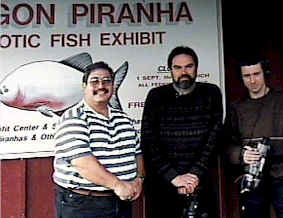
Sao Paulo
. Schultz was appointed to a
position at the Museu de Palista in 1947, which he held until his death in 1966. Throughout his career at the Museu de
Palista, Schultz continued to conduct fieldwork.
Schultz collaborated on a study of the Kraho with Herbert Baldus,
producing a collection of Kraho mythology.
He also worked frequently with his wife, Wilma Chiara. Throughout his career, Harald Schultz
made several important and substantial contributions to the Museu de Palista,
especially the Seccao de Etnologia and the Revisto do Museu Palista. In 1962, Schultz’s book Hombu
was published and received international acclaim for its account of Brazilian
Indian life. Schultz was also
published several times in National Geographic Magazine throughout his
career.
But I
had other things in life that needed to take care of, one of them being
high school. I would regularly visit the local pet store named Pet World
(prior to that, it was known as the Oxnard Aquarium). The pet store sat next
to the only public park in Oxnard at that time. The park remains, but has
changed much since then. There, I became friends with Woody Trout and
Woody helped me get my first live juvenile piranha (P. nattereri) and
many more after 1964. One fish in particular caught my eye. It was a very bright
red-throated fish that I knew, almost instinctively, was Serrasalmus
spilopleura ( = S. sanchezi), according to the Schultz book. The fish
was for sale for a huge amount of money $39.95. In 1965 that was a lot of
money!!! The fish was 7 inches long and I felt the pull that all piranha
collectors have, the need to buy the fish. My parents thought I was a bit
strange wanting such a fish and the purchase amount was too much for my parents
to afford. I was already given up my lunches to save money to buy juvenile
piranhas (unbeknownst to my mother), and this fish was out of the question.
Still I had to find a way to get it. So I talked my biology teacher (Jerry
Lipman) to purchase the fish for the school science lab. There I was able to
enjoy the fish and learn about it. It gave me the motivation I needed to
continue studying piranhas. It was also during this time that Woody
mentioned to me the fish in question was actually S. sanchezi.
 Then Vietnam interrupted my schooling
and I left for that war in 1970 after completing Airborne training at Ft.
Benning, GA. During the war, I was medivac out for injuries sustained and spent
time in a San Francisco Army hospital. After I was released, I re-visited the
Steinhardt Aquarium and saw a live fish captioned as S. niger. The fish
was only 6 inches total length and very dark. Little did I realize this same
fish would re-enter my study of piranhas and the future OPEFE web site. During
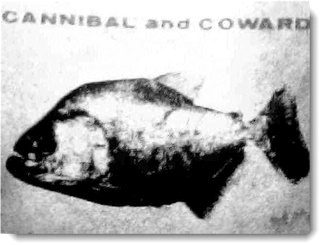
this visit I took several photographs of the fish and purchased a reprint of Living
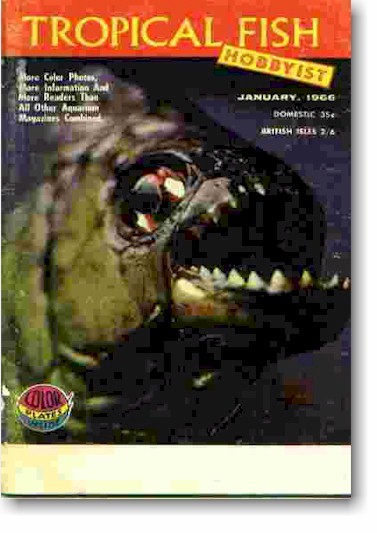
Fishes of the World. I also purchased a hobbyist pamphlet which discussed S.
niger and included a front page photograph (see photo top left); COVER Anchor,
The Journal of The San Francisco Aquarium Society (35 cents). Title of this
pamphlet was Piranha! Cannibal and Coward (August 1971). I returned home,
but found that I no longer fit in with family or friends. Vietnam had changed me
forever. I was not able readjust to family or friends. So I left for Hawaii in
search of something in life that I needed. I spent much of my time at the beach,
talking to fishermen and sometimes taking home a caught saltwater fish (mostly
Moorish Idols, a type of beautiful saltwater fish). I also discovered that the
island didn't allow piranha possession. I lived there for about 8 months and
then made a decision to return back to the mainland. I returned and found a job
at two (2) radio stations and began reestablishing my collection of
piranhas.
Then Vietnam interrupted my schooling
and I left for that war in 1970 after completing Airborne training at Ft.
Benning, GA. During the war, I was medivac out for injuries sustained and spent
time in a San Francisco Army hospital. After I was released, I re-visited the
Steinhardt Aquarium and saw a live fish captioned as S. niger. The fish
was only 6 inches total length and very dark. Little did I realize this same
fish would re-enter my study of piranhas and the future OPEFE web site. During
this visit I took several photographs of the fish and purchased a reprint of Living
Fishes of the World. I also purchased a hobbyist pamphlet which discussed S.
niger and included a front page photograph (see photo top left); COVER Anchor,
The Journal of The San Francisco Aquarium Society (35 cents). Title of this
pamphlet was Piranha! Cannibal and Coward (August 1971). I returned home,
but found that I no longer fit in with family or friends. Vietnam had changed me
forever. I was not able readjust to family or friends. So I left for Hawaii in
search of something in life that I needed. I spent much of my time at the beach,
talking to fishermen and sometimes taking home a caught saltwater fish (mostly
Moorish Idols, a type of beautiful saltwater fish). I also discovered that the
island didn't allow piranha possession. I lived there for about 8 months and
then made a decision to return back to the mainland. I returned and found a job
at two (2) radio stations and began reestablishing my collection of
piranhas.
I
attended Moorpark Jr. College at Moorpark, California. My love of the piranhas
continued eventually doing a mini-documentary about the fish for the Radio/TV
department there as part of my college credit. It was also during this time I
purchased my first Orinoco red-belly, known as Serrasalmus nattereri (= Pygocentrus
cariba). I questioned myself why this fish would be a Serrasalmus
nattereri since it had a prominent black spot and none that I purchased had
it. But these questions remained unanswered until much later when I wouid speak
to Dr. William L. Fink in 1992. I tried again to fit in with family and friends,
but Vietnam still haunted me. I found material in Field and Stream article
entitled "The Little Fish Who Eats People"
written by A. J. McClane. In this magazine, there were several piranhas listed
by common name; 1) Kitchen Boy Piranha 2) Red Piranha 3) Natterer's Piranha 4)
Blacktailed Piranha 5) Donkey Castrator Piranha 6) Black Piranha 7) White
Piranha and 8) Wimple's Piranha. I would later identify this piranhas as; The
Kitchen Boy Piranha (Serrasalmus eigenmanni), Red Piranha (Pygocentrus
nattereri), Natterer's piranha (Pygocentrus piraya), Black-tailed
Piranha (Pygocentrus nattereri), Donkey Castrater Piranha (a very large
and dark, Pygocentrus cariba), Black Piranha (S. rhombeus), White
Piranha (strongly resembles S. hastatus) and the Wimple's Piranha (Catoprion
mento). During those formative years, I was able to secure more piranhas
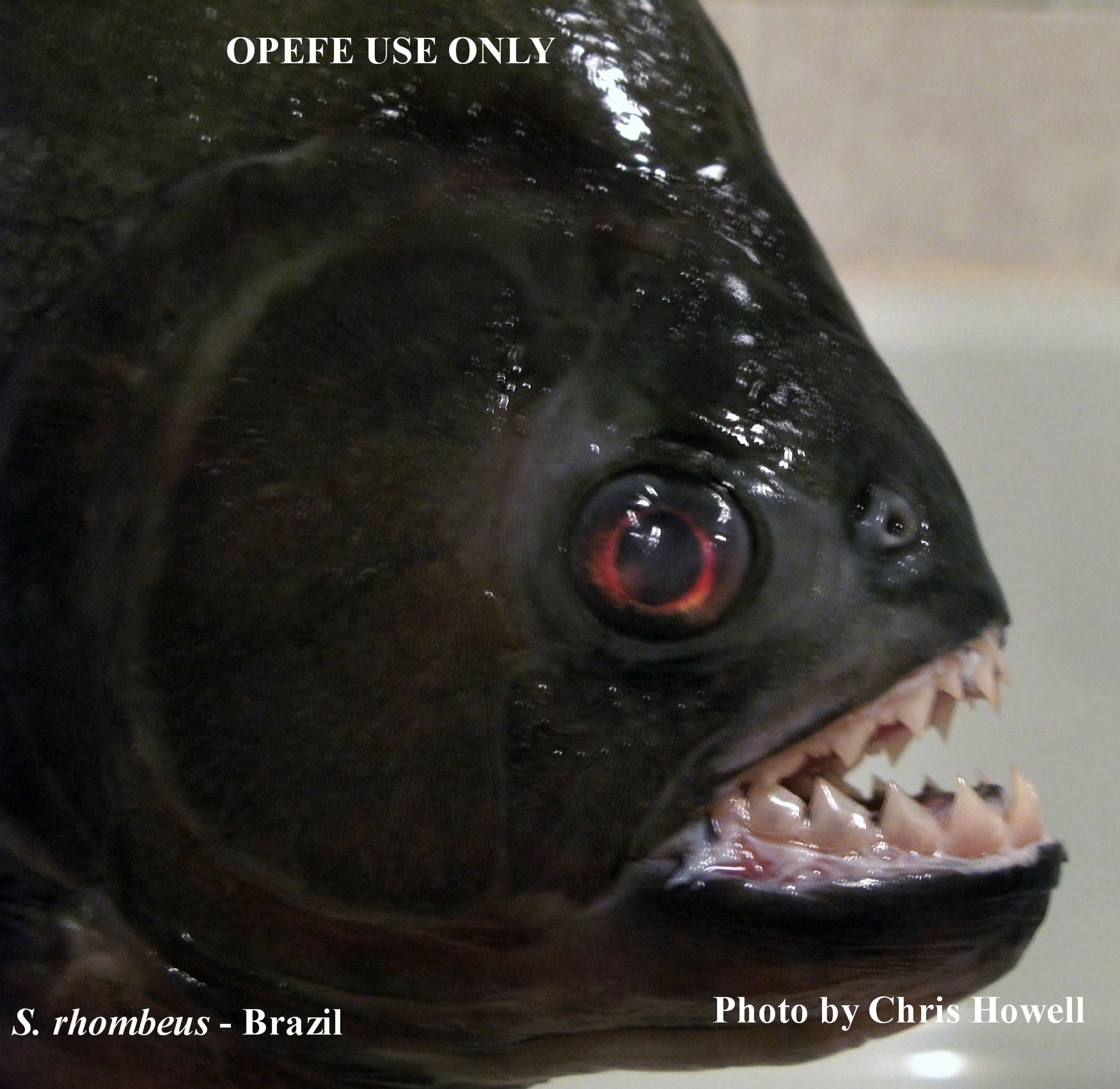
including a large Serrasalmus niger (S. rhombeus, nearly a foot
long), an unknown convex-anal fin Serrasalmus species, Pygopristis
denticulata, P. piraya, some Pristobrycon species, P. nattereri (southern).
|
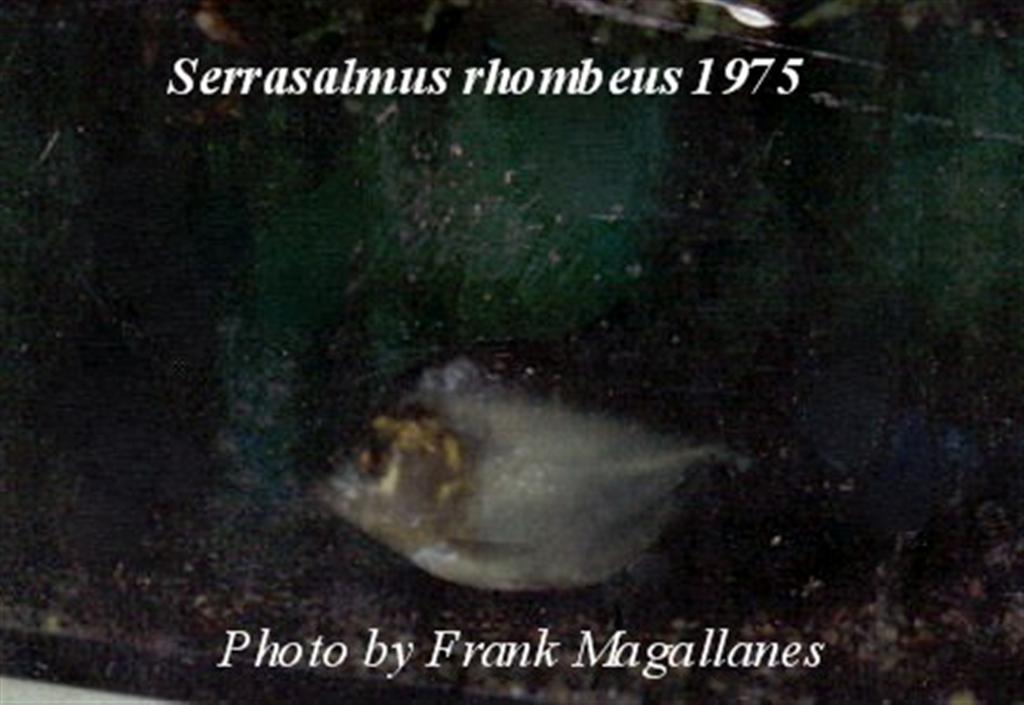
Photograph
of the large S. .rhombeus purchased as S. niger |
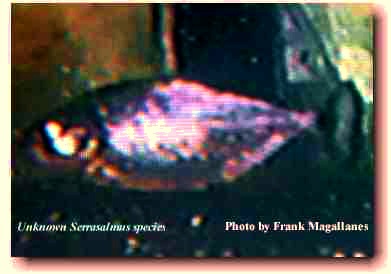
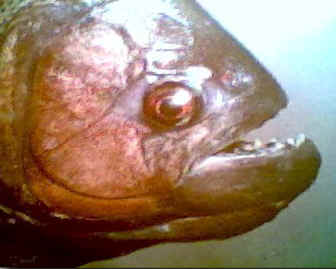
Unknown convex anal piranha. Probably S. maculatus |
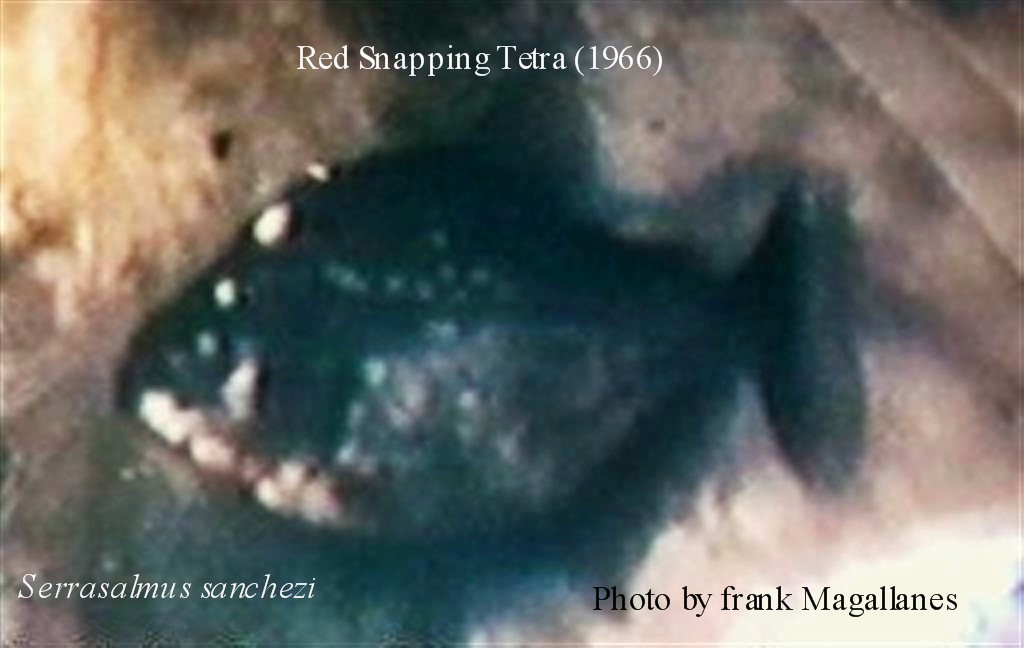
Red
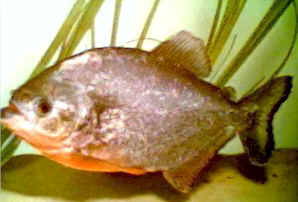
Snapping Tetra aka Serrasalmus sanchezi, 1966 |
I
finally decided to return to the military. I had no real peace in my life and I
needed to leave again. I thought Army life would be the answer for me, even
though Vietnam was still haunting me. In the latter half of 1976, I left for
Germany and 2 years later was informed my collection which was in the care of a
relative was lost. I was heartbroken but there was nothing I could do. I visited
the zoological parks in Germany and tried to find more piranhas. To no avail
until my return to the United States in 1979. I spent four years remaining in
the military until I decided I need to get out. I was unhappy with the changes
of the "new modern U.S. Army" and the politics that entered it. So I
left with my wife and children for a new life. In 1985, I attended New Mexico
State University, but had to interrupt my studies because of family obligations.
I had begun communication with author John R. Quinn of TFH who wrote Piranhas
Fact and Fictions and was formerly an Oregon resident.
In
1989, in a work related injury I became disabled and moved to Oregon in 1992. I
was also dealing with Post Traumatic Stress from my experiences from Vietnam. My
counselor advised me to find a place or a new home where I could find peace and
quiet, so I chose Oregon to do that. I had traveled through Oregon before in my
early years of the military and I remembered the people here as being friendly
with open hospitality. So with my family, we left California forever,
abruptly taking my collection of piranhas with me. However, it was here in
Oregon that an anonymous tipster told Oregon Department of Fish and Wildlife
(ODFW) officers about piranhas I had in my possession. The piranhas were
confiscated and then I decided to fight the State of Oregon tin
Court. Meanwhile, Dr. Fink would send to me the first of many scientific
citations pertaining to piranhas and open the door to the future in piranha
research at the near-professional level. I spent countless hours in libraries
looking for as much information on piranhas that I could. I had little social
life and my wife was not to happy, as I spent all my time studying and locating
data on these fishes. I took courses in veterinary medicine as a technician and
graduated from the School of Animal Science Atlanta, Georgia in 1997. But it
remained a field I was not interested in, as the pull of the piranhas was very
strong indeed. Aside from my schooling, I wrote many amateur papers including
one important (unpublished) article regarding the sexual dimorphism of
Catoprion mento. Now, a larger distraction was taking place as I began the
search for an attorney to keep the State from confiscating my fishes. Hardly
anyone believed I would prevail, but there was something driving me to go on and
fight the the ODFW.
Mr.
Charles Lee, an attorney from the City of Roseburg represented me pro bono
after I explained the true nature of the piranha and my background in science
and knowledge of the piranha. I loaded Mr. Lee down with books, material and
hours of indoctrination about the natural behavior of the piranha and the
historical public fear of them. After 2 weeks of this, we went to court in hopes
of convincing Judge Lasswell. .
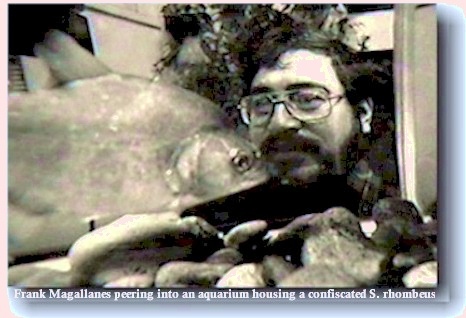 Judge William
Lasswell (District Court) heard the case and ruled that piranhas were
not illegal under the present statute which listed all Serrasalminae fish
as piranhas. The win in court created a legal precedent across the United
States. The picture on the left is from the front page of the News-Review
Newspaper. It was later picked up and used by Associated Press (AP) in
subsequent articles about Oregon's piranha. The State fined me $25 for
possession of one species of true piranha (Pygocentrus nattereri), the
two (2) pirambeba (S. rhombeus) were returned to me. The personnel at
ODFW were not to happy and my victory and celebration was short lived.
Judge William
Lasswell (District Court) heard the case and ruled that piranhas were
not illegal under the present statute which listed all Serrasalminae fish
as piranhas. The win in court created a legal precedent across the United
States. The picture on the left is from the front page of the News-Review
Newspaper. It was later picked up and used by Associated Press (AP) in
subsequent articles about Oregon's piranha. The State fined me $25 for
possession of one species of true piranha (Pygocentrus nattereri), the
two (2) pirambeba (S. rhombeus) were returned to me. The personnel at
ODFW were not to happy and my victory and celebration was short lived.
Oregon
Department of Fish and Wildlife had other plans. One that would take me into a
long process of legalizing piranhas throughout all of Oregon. In the meantime,
Oregon Department of Fish and Wildlife then went to the legislature to prohibit
my pirambeba. What they could not win in court, they tried to make illegal
through the legislative process.
 With the help of
Senator Bill Fisher (then a State representative) and Senator Rod Johnson, I
testified in front of the House Natural Resources Committee. The committee
agreed to allow possession of piranhas based on my testimony. Still not ready to
concede defeat, Oregon Department of Fish and Wildlife attempted to influence
the Senate, by creating a fear that piranhas would introduce disease and
parasites to the salmon population. Again, with the help of Senator Bill Fisher,
Senator Rod Johnson and a well-published parasitologist, Dr. Robert J.
Goldstein, the House Bill (HB 2611) passed 23 and 5 against to allow
possession of piranhas in Oregon. Oregon Governor John Kitzhaber signed the bill
into law on September 11, 1995 revising ORS
Statute allowing possession of Piranhas.
With the help of
Senator Bill Fisher (then a State representative) and Senator Rod Johnson, I
testified in front of the House Natural Resources Committee. The committee
agreed to allow possession of piranhas based on my testimony. Still not ready to
concede defeat, Oregon Department of Fish and Wildlife attempted to influence
the Senate, by creating a fear that piranhas would introduce disease and
parasites to the salmon population. Again, with the help of Senator Bill Fisher,
Senator Rod Johnson and a well-published parasitologist, Dr. Robert J.
Goldstein, the House Bill (HB 2611) passed 23 and 5 against to allow
possession of piranhas in Oregon. Oregon Governor John Kitzhaber signed the bill
into law on September 11, 1995 revising ORS
Statute allowing possession of Piranhas.
On
March 4, 1994, I founded the Oregon Piranha & Exotic Fish Exhibit [OPEFE].
With just 2 aquariums that were strategically placed in my home's 17 foot long
picture window, OPEFE grew into an attached building to over 200 aquariums and a
number of visitors each year numbering over 3,000. The vast majority of fishes, including
piranhas are donated by private aquarist, pet stores, and exotic fish
wholesalers from across the country. I chose this business name because 1) of my
love of Oregon and wanted this state to be recognized as a legal State. 2) I
wanted the piranha fish to be always associated with Oregon and the reversal of
a 1970 "non-scientific law" which prohibited the fish based
solely on common names. I proudly display my banner with the words:
"Please
Do Not Release Unwanted Pet Fish"