Pirambeba
Dorada or Piranha Negra
also simply called Spilo
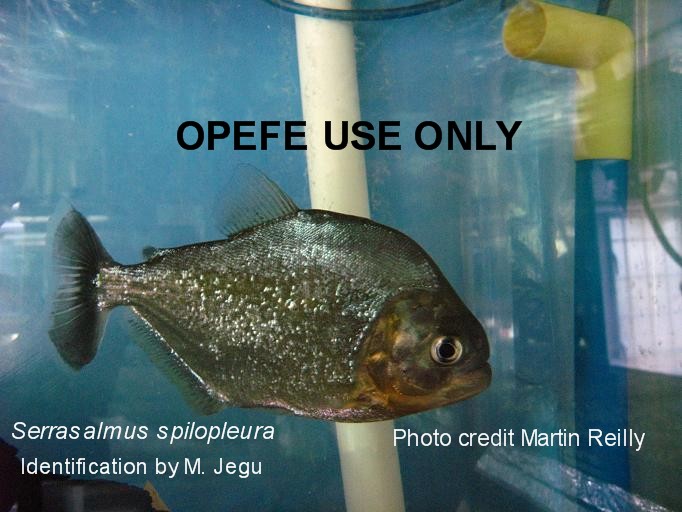
Serrasalmus spilopleura
KNER 1858
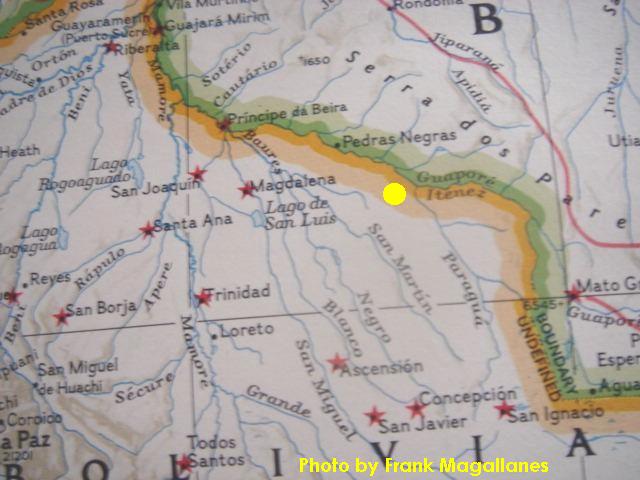
Photo of San Martin, Bolivia S. spilopleura
|
FROM FRANK MAGALLANES - Both authors, Jégu and Fink have opposing views of this particular species (See S. nigricans). The problem seems centered on the placement of the Amazonian species described as S. nigricans. This species is a younger name to S. maculatus. In terms of nomenclatural speaking S. nigricans should have been a synonym to S. maculatus and would appear overlooked by Jégu. All things being equal, S. nigricans should be relegated as a junior synonym to S. maculatus. S. maculatus is a younger name to S. spilopleura. S. spilopleura is the oldest name to others. However, this is my opinion and perhaps should be looked into further detail by a competent authority in the future. Older published piranha books for hobbyists have misidentified S. gibbus as this species and a few cases S. sanchezi, a Peruvian species. To review some of the S. maculatus species that resemble S. spilopleura visit this link. |
INTRODUCTION
This species was originally described from Rio Guapore, Bobota, Mato Grosso, Brazil (Kner 1858:166 [6] [Sitzungsber. Akad. Wiss. Wien v. 32 (no. 22))
The maps shown below are approximate range of certain species. It does not show the complete range. No other species has given me so much reason to pause and consider as this one and S. maculatus. The problem centers on the description and rehabilitation of the species.
This rehabilitation places the true S. spilopleura from the Guaporé Basin only (see map on left). The Central Amazon fishes are S. maculatus. To further add to this confusion, the fish from the Pantanal region have not been rehabilitated but is being recognized as S. maculatus as well. So hobbyists are cautioned about using either name on the species from that region until more is learned. For the hobbyist and my best reading of the current Jégu rehabilitation, S. spilopleura maintains is midline terminal band throughout its life. Presently, S. spilopleura could be considered a red-bellied species when compared to its near twin S. maculatus.
Photo on left possibly S. spilopleura (rio Guapore). The Piranha Book (1972), G. S. Myers, page 76.
S.
maculatus keeps its midline
terminal band as young specimens
(usually under 2 inches TL), but then during its growth its
midline band extends out to a thin hyaline edge on the tail
(caudal fin). Most often the thin hyaline edge on S.
maculatus is not present, but becomes a complete dark band.
With S. spilopleura, a few specimens have been observed
with a total black tail and dark body, these are often breeding
adults. The same coloration of the tail is sometimes reported
for S. maculatus and is fairly common for most piranha
species. Map to the left (bottom) is based on the Jégu &
dos Santos, 1988.
S. spilopleura is a solitary species, unlike S. maculatus which may travel in small groups. This is largely an individual species choice and any such group gathering is never long lasting. Indeed, the group itself is largely based on orientation of same size, So some individuals may leave the group and join others of same traits and attributes.
DEATHS ATTRIBUTED TO PIRANHAS
Scavenging on human corpses as a source for stories about man-eating piranhas Ivan Sazima and Sérgio de Andrade and Guimarães
Synopsis Piranhas have a reputation for man-eating, notwithstanding the absence of authenticated records of persons attacked and killed by these fishes. Three cases of piranhas scavenging on human corpses were recorded in Mato Grosso, western Brazil. One corpse, found four days after drowning, was almost reduced to a skeleton. Another corpse was recovered in a few hours, also after drowning, without the soft parts of the head. The third corpse, recovered 20 h after the victim fell into the water due to a myocardial infarction, had flesh only on the trunk. Pygocentrus nattereri and, to a minor extent, Serrasalmus spilopleura were probably the necrophagous piranhas. Some of the human deaths attributed to piranhas most probably are cases of scavenging on drowned or otherwise already dead persons, by these opportunistic schooling carnivores.
IN THE AQUARIUM
Cautionary statement; some aquarists report keeping this fish as a group, however long term results are sketchy. They are a fin biter, so tank mates are out of the question. Recommend keeping as solitary species in home aquarium. Aquarists are cautioned not assume the fish they have in their collection might be S. spilopleura. The species spawn prolifically like S. maculatus which also breeds year round. They are fin-biter's so it is best to keep them solitary in the home aquarium. They have been known to eat seeds during the Amazonian dry season or lurking among weeds to feed on fish fins as the target fish swims by. They are commonly known as either gold or ruby red in the trade, this latter name coined by *George Fear. These common names derive from the geographical variation of color and spotting found on these fish. There appear to be some yellow forms of this species in Brazil and often causes confusion among hobbyists when comparing it to the S. maculatus? from Paraguay/Paraña region. This latter form has a subterminal black band during juvenile growth, then this band widens sometimes touching the edge, giving it a terminal band appearance. In truth, S. maculatus is a difficult fish to differentiate from S. spilopleura. For this reason, in order to have a positive identification, one must know the exact collection point.
DNA INFORMATION
New information (updated by largest paragraph number):
2. Gradual frequency differences in the A*125 and B*210 alleles at two GPI loci detected in S. spilopleura caught between the upper Paraná River (cytotype 'a') and the lower Paraná River (cytotype 'b' and cytotype 'c') led Cestari (1996) to suggest that there may be interbreeding between fish from these two sites, supporting the hypothesis of a hybrid origin for the 'c' cytotype. Several cases have been described in the literature where genetic polymorphism seems to be shared between a pair of species while closely related species might be expected to show higher levels of shared polymorphism (see Clark, 1997). Nakayama et al. (2001) considered S. rhombeus to be a cryptic species, with imperceptible morphological differences among the three cytotypes examined by us and it follows that the occurrence of a Est-D3 locus polymorphism shared among these cytotypes would reasonably be expected to follow the same pattern as that seen for the 2n = 58 cytotype i.e. segregation of alleles following a Mendelian model which did not occur. Additionally, our data may suggest that these Central Amazon piranhas karyotypic groups partially represent isolated populations, or populations which have been isolated for an insufficient period of time for the fixation of different cytotype-specific alleles. A character applied for identifying taxonomic units with species status should occur in all members of the species and not in other species, i.e., be a unique fixed allele or its product. Consequently, various distinct genetic and molecular techniques such as chromosome, DNA and protein studies should be complemented with meristic-morphometric studies in order that the taxonomic status of Central Amazon rhombeus complex can be elucidated. (Aylton Saturnino Teixeira et al.,).
Among the piranhas, genus Serrasalmus is probably the most studied genus in Dna chomosomal research. Serrasalmus spilopleura, a widespread species found throughout the Amazon basin, the Paraná-Paraguay and Uruguay basin, 5 cytotypes(=cell types) have been described so far. Three of them were found in Paraná-Paraguay basin (CESTARI and GALETTI 1992a; CESTARI 1996) and two in the Catalão Latke in the Amazon basin (NAKAYAMA et al. 2000). There is variability due to chromosomal rearrangements and to understand these alterations and its association to the speciation process is one of the major challenges in karyoevolutionary (= evolutionary change in the chromosome set) studies (WHITE 1977; JOHN 1980; GUERRA 1988). By recognizing that S. spilopleura is chromosomaly polymorphic (=gene varying body shape) and that might exist a species "complex" (NAKAYAMA et al. 2000), the present study is aimed to increase the sampling sites in the Central Amazon basin and to document the cytogenetic variation found in nominal forms of S. spilopleura. Sixty-two (62) specimens of species S. spilopleura were collected for this test. Three different areas in the Central Amazon basin: (1) At the confluence of Solimões and Negro Rivers (Catalão Lakes), 31 specimens (13 males, 16 females and 2 undetermined sex ones); (2) in the lower Manacapuru River, a tributary of Solimões River, 15 speciemens (3 males and 12 females); (3) 16 specimens (10 males and 6 females) in the Amazon River, near to the Itacoatiara township (CENTOFANTE, PORTO, FELDBERG 2002).
All specimens displayed 60 chromosomes and FN 108. What was interesting is that they detected structural polymorphism (varying body shapes) without sexual chromosomal heteromorphism (= changes in development that lead to changes in the end result), leading them to propose new cytotypes for this species. According to JOHN (1980), the occurrence of rearrangements is not a common event, happening seldom on homologue (=similar) chromosomes. Thus, these body (or structural) changes are introduced in wild populations by interbreeding. In areas like this lake the hypothesis is that they should not exclude the possibility that this type of situation can favor the fixation of individuals bearing chromosomal arrangements. NAKAYAMA, et al. (in press) in S. rhombeus and by FELDBERG et a. (1999) in Plagioscion sp. this chromosomal arrangement was detected. According to GUERRA (1988), some chromosomal arrangements are more frequent under certain environmental conditions, since higher levels of polymorphism occur for species inhabiting their most favorable environment. Generally speaking, all species of genus Serrasalmus present chromosomal pair with heterochromatic blocks on long arms, which is considered to be a cytogenetic marker for genus Serrasalmus (NAKAYAMA 1997). However in some (C and D cytotypes), this pair appears to not be composed by homologue chromosomes. This lack of homology might be related to rearrangements (CENTOFANTE, PORTO, FELDBERG 2002). What this work provides is a definition of how important the role is non Robertsonian chromosomal rearrangements in the chromosomal evolution of the subfamily Serrasalminae. Further what these investigations show is how the chromosomal polymorphism in Serrasalmus spilopleura may indicate a speciation process when compared to samples from Amazon and Paraña-Paraguay basins (CENTOFANTE, PORTO, FELDBERG 2002).
Cytotype information by populations and individual (s)
Cytotype A: 3 populations from Catalaõ, Manacapuru and Itacoatiara.
Cytotype B: During collection trips from July to December, 1998, in these 3 areas, was not found.
Cytotype C: Was present in 7 individuals only at Catalaõ Lake population.
Cytotype D: A second pair was formed by different sized chromosomes, and it was found only in one individual from Manacapuru River mouth.
The Rehabilitation of S. spilopleura vs. S. maculatus: OPEFE readers may access the actual .pdf by following this link.
|
*FROM GEORGE FEAR - Shark Aquarium: The common name Ruby Red Spilo was erected by George Fear to differentiate this fish (caught 170 miles (275km) northwest of Goiania) from the gold S. maculatus a similar appearing species from Paraguay/Paraña. This fish is found in the river that spills into the rio Tocantins. The authority M. Jégu recognizes this species and the one from Bolivia as being S. spilopleura. |
Norman (1929) was not able to identify S. maculatus (Kner 1868) from the Rio Guaporé specimen. But believes it to be S. spilopleura. Norman maintained that the broad dark (brown or black) margin midway on the caudal fin became broader with age and less intense. In several specimens Norman examined from the Amazon, the band is much more broader extends out almost to of the caudal fin. Where the hinder part of the had been worn away, the fish appears to have a marginal rather submarginal dark band.
My translation from French to English of Messr. Jégu citation may not be completely accurate. I am using my own limited knowledge of the language to translate the meaning of this recent citation
Serrasalmus spilopleura KNER, 1858 and S. maculatus KNER, 1858 are described from Guaporé Basin. Most authors have always considered S. maculatus as a synonym of S. spilopleura, a well-known species from Paraná-Paraquay and Amazon basins. The examination of the type-series in Vienna shows that S. maculatus and S. spilopleura are in fact two different species. In S. spilopleura the infraorbital series bones are narrower and the naked cheek zone is broader than in S. maculatus. Two thirds at the base of caudal fin are dark and the last third hyaline in S. spilopleura whereas S. maculatus shows a final or subterminal black bar in the caudal fin, depending on the size of the specimens and the sampling area.
S. spilopleura specimens identified by recent authors have to be placed under S. maculatus. The specimens from Guaporé basin show a morphotype very close to that of S. spilopleura but they differ from this species by a gray to black terminal band on the caudal fin.
Serrasalmus maculatus and S. spilopleura were described from the rio Guaporé by Kner (1858:166), followed up by Natterer, then presented with more details in the work of Kner (1860) on the Characidae. Kner (1858) indicates that the edge of the anal and tail fin of S. maculatus is black and that the flanks carry spots while S. spilopleura the edge of the tail is clear and the flanks carry a humeral black spot. Kner (1860) indicates that according to Natterer, who collected these fishes, the vulgar names are << Piranha pequena >> for S maculatus and << Piranha doce >> For S. spilopleura that Heckel (in Kner, 1860) names Piranha dulcis.
Kner, 1858 does not give any value for the meristic and morphometric measurements of Serrasalmus spilopleura, to the opposite of S. maculatus. The author describes that none of the examined S. spilopleura presents a series of complete ectopterygoid teeth, while it observes 5 to 6 teeth to the palate with S. maculatus, in alcohol and at least 3 on the dry specimens. Kner (1858) indicates also as the infraorbital series is notoriously narrower with S. spilopleura than with S. maculatus, the naked zone surrounding the infraorbital is 3 being wider with S. spilopleura. The size of the black pupil which is banded are well visible on the representation of S. maculatus (Kner, 1960) : pl. 4, fig. 10), but only a darker humeral spot is visible on the flanks of S. spilopleura (Kner, 1960: pl. 5, fig. 11). For both of these two species, it is not known the number of specimens examined, but the author indicates that the specimens of S. spilopleura originates from Bogota, Rio Guapore in the Mato Grosse.
For S. maculatus, that also originates from
Guaporé, Kner (1858)
examined dry specimens from Caicara. Gunther (1864: 370) quotes S. spilopleura of the
river Capim of Brazil and reviews the description of Kner (1858) for S.
maculatus. Eigenmann (1915; 249) distinguishes S. spilopleura, by
having a tail with a black band submarginal and has the distal edge hyaline,
while S. maculatus presents a tail with a marginal black band. Eigenmann (1915: 253)
cites that S. spilopleura is known from Amazon and Laguna's in Paraguay or
pools and is cited for the first time by Boulenger (1896), while S. maculatus would be
limited in distribution in Bolivia and in the Amazon river. Norman (1929: fig. 13)
describes S. spilopleura with a well defined submarginal tail band and confirms
the fishes presence in the lagunas of the Paraguay and of the Amazon; il (p. 799)
suggested that S. maculatus be considered synonym of S. spilopleura. The last
review of S. maculatus was presented by La Monte (1935) from the Rio
Jurua. Followed up by Fowler (1950: 384) and Géry (1976) both considered S. maculatus as
synonym of S. spilopleura. Géry (1964) observed that it is often difficult
to determine the sub terminal black band of the tail in S. spilopleura
found in Iquitos region of Peru. According to this author (1978: 286), S. spilopleura
is characterized by the presence of teeth on the palate and of a hyaline
distal band on the tail. Nevertheless, it illustrates the uniform color of
these two specimens (p. 292).
Santos and et al. (1984: 35), then Jegu and Santos (1988: pl. 11), S. spilopleura of the Tocantins are represented with the characteristic black subterminal band on the tail, black edges on the fin tips on the flanks of the young ones and a humeral spot with the adults. The latter authors indicates (p. 256) that the exposed zone of the cheek seems wider and the eyes smaller on the representation of S. spilopleura of Kner (1860), but they follow Norman (1929) and place S. maculatus, Tocantins cited by Ulrey (1895), as synonym of S. spilopleura. Lauzanne in Loubens (1985: 53, fig. 48) distinquishes S. spilopleura from the Mamoré basin and the Itenez (Bolivia) using the same color characteristics. Géry et al. (1987: fig. 58, 59) reviewed the related bibliography and places S. spilopleura in the Parana-Paraguay with S. spilopleura of the Paraguay represented with having a subterminal black band on the tail and tips of the fins black, on the flanks of a juvenile of 77 mm SL. Santos (1990: 176, fig. 178) describes S. spilopleura from the Guaporé as having body markings distinctly defined, without the tail edge being hyaline but with ectopterygoid teeth. The author (p. 175-177) cites the presence of two other species without ectopterygoid teeth from Rondonia. The one species (Serrasalmus sp. 1, fig. 186), described from the Guapore and effluent of Jamari, a tributary branch from the Madeira, the edge of the tail is black and with the other (S. aureus, fig. 183), described from the Jamari, the edge of the tail is hyaline.
Castro (1994: 64), from the Putumayo (Colombia), and Ferreira et al. (1998: 82), from THE AMAZON and the region of Santarem (Brazil), describes S. spilopleura with a black subterminal band on the tail. Fernandez-Yepez (1969), and Mago Leccia (1970) cites S. spilopleura from Venezuela, but Machado-Allison and Fink (1996) do not keep this species in their manuscript of the piranhas from Venezuela.
Finally, Jegu and Keith (1999A) cite the presence of S. spilopleura in the marshes near the shore of the Oyapock where the adult forms uniformly turn purple and dark, the characters of the color of the tail is not more visible. These authors agree therefore on the presence, with the young S. spilopleura of the basins of the Amazon and Paraguay, of a black subterminal band on the tail, black spots on the flank and a clear bottom. The coloration of the adults would be more subdued and brilliant violet and the coloring of the tail more difficult to observe (Jegu and Santos, 1988; Azuma, 1990).
Jegu and Keith (1999B) place S. spilopleura in the subfamily of the Serrasalminae from the Varzea in the the basin of the Amazonia, towards the east and extension to the South even in the high Tocantins and to the North in the marshes of the Amapá (Brazil) and from the Oyapock.
Two specimens of the Guaporé, collected by Natterer and preserved in alcohol (NMW 17995, 162 mm LS and NMW 17996, 122 mm LS) are identified as syntypes of S. maculatus. A third specimen (NMW 57058, 109 mm LS), collected by Natterer from Barra do Rio Negro, was recently (Feb. 10, 1978) designated syntype in the collection. The locality << Barra do Rio Negro >> Is from the mouth of the Rio Negro, in downhill of Manaus. It is without a doubt one of the specimens of the type series for Kner (1860) and clearly indicates that the specimens shown fit the description of S. maculatus originating from the Rio Guaporé.
In his work, (KNER 1858: 164) describes Myletes maculatus of the Guaporé of which it resembles also the description in 1860 (p. 26) and presents an image (pl. 2, fig. 5). A specimen of Myletes maculatus is stored in the London Museum and integrated to the collection under the number BMNH 1928.1.24:10. Eschmeyer (1998:994) lists this specimen by error as syntype of Serrasalmus maculatus, stating that it is very likely a syntype of M. maculatus, placed today in the genus Metynnis.
The three individuals have homogenous morphometric characters. The general from of the body is very close to that of S. spilopleura, but these specimens are different by several characters. he body is a little higher (54,2-57,2% SL vs 49,3-53,6 for S. spilopleura) while the posterior length is less (distance postdorsale-postanale 28,6-29,5% SL vs 31,2-33,6 for S. spilopleura). The muzzle is short and obtuse, the head and and profile are wide.
The series of infraorbital bones are wider with S. maculatus (infraorbitaire 3, 10-12,9% SL vs 7,6-8,7 with S. spilopleura; SO4 10,4-13,6% SL vs 8,6-10,2) (Fig. 5A, 5c). The width of the cheek is 3.0 with S. maculatus (5 – 11 times the wide of the infraorbital 3 vs 1,9-2,5 times with S. spilopleura) (Fig. 5b). The postoccipital distance, the predorsal distance, the base of the posterior and the base of the anal are longer with S. maculatus (Picture II). On the other hand, the interdorsal distance and the distal end of the anal are shorter with S. maculatus, this then explains the lengthening impression more important on the posterior part with S. spilopleura (Fig. 1).
The mouth of S. maculatus, short and massive is rather near the size of S. spilopleura. With S. maculatus, the teeth of the premaxillary are tall and the dentary are high and pointed (Fig. 3b).
Dr. Michel Jégu Description
In vivo, S. spilopleura est argenté avec un reflet jaune sur tout le corps (SANTOS et al., 1984, p. 35). Sur le matêriel préservé, on observe de petites taches noires et rondes sur les flancs. Celles-ci disparaissent graduellement chez les spécimens de plus de 90 mm de LS dont les flancs deviennent de plus en plus foncés, et presque noirs chez les jeunes spécimens de plus de 130 mm de LS. La partie antérieure et le bord libre de l'anale, la pointe de la dorsdale et l'estrémité de l'adipeuse sont grises à noires. La base de la caudale est foncée et une bande noire, au contour bien net chez les jeunes spécimens et plus diffus chez les plus grands, est située à l'extrémité libre de la caudale, laissant le bord de la nageoire hyalin, lorsque celui-ci n'a pas été réduit par des morsures. Une tache humérale, haute et étroite, apparaît sur les grands spécimens, mais est absente chez le plus petits individus.
ENGLISH TRANSLATION - Not to be considered accurate translation.
In life, S. spilopleura is silvery with a yellow reflection on all body (SANTOS and Al, 1984, p. 35). On the preserved specimens, one observes small black and round spots on the sides. Those disappear gradually when specimens grow more than 90 mm SL and the sides become increasingly dark, and almost black with young specimens of more than 130 mm SL. The anterior part and the distal edge of anal, the point of the dorsal and the adipose fin are gray with black. The base of caudal is dark and a black band, is well formed on the young specimens and more diffuse at largest size, is located at midway of the caudal fin, leaving the edge of the fin hyaline, when not reduced by bites. A humeral spot, high and narrow, appears on the large specimens, but not present with the smaller individuals.
Dr. William L. Fink - Revision of genus Pygocentrus
Pygocentrus nigricans, from "Equatorial Brazil," described by Agassiz (in Spix and Agassiz, 1829) as a Serrasalmo. This is indeed a Serrasalmus, the Amazonian form equivalent to spilopleura in the south of Brazil, as the original plate (XXX) clearly shows. The name nigricans was used by Müller and Troschel (1845) in a new combination (their new genus Pygocentrus). The specimen they considered to be nigricans is actually P. nattereri and is held in the Berlin Museum (ZMB 3630). Müller and Troschel gave no evidence that the specimen they examined was the type of Agassiz's nigricans, and the specimen has dorsal-and anal-fin counts slightly different from those reported by Agassiz. In addition to the evidence of its identity from the well-done figure, as noted above, the description of live color in nigricans accurately describes the breeding adult of the Amazonian Serrasalmus, mitigating against placement of this species in Pygocentrus (Fink, 1993).
CITED REFERENCES FOR ABOVE:
Serrasalmus nigricans
Spix, J. B. von and L. Agassiz 1829-31 Selecta genera et species piscium quos in itinere per Brasiliam annos MDCCCXVII-MDCCCXX jussu et auspiciis Maximiliani Josephi I.... colleget et pingendso curavit Dr J. B. de Spix.... Monachii. Selecta Piscium Brasiliam: Part 1: i-xvi + i-ii + 1-82, Pls. 1-48;, Part 2: 83-138, Pls. 49-101. [Part 1 published June 1829, part 2 Jan. 1831; see Kottelat 1988 [ref. 13380], Whitehead & Myers 1971, Pethiygoda & Kottelat 1998 [ref. 23896]. No types known Equatorial rivers of Brazil. No types known. (Fink 1993)
Valid as Serrasalmus nigricans Spix & Agassiz 1829 (Jégu in Reis et al. 2003, with author as Agassiz. Distribution: Amazon R. basin, Brazil.
Synonyms:
Pygocentrus dulcis Kner (ex Heckel) 1860
Serrasalmus aesopus Cope 1872
ABSTRACT
BIOLOGICAL ASPECTS OF THE PIRANHA Serrasalmus spilopleura (CHARACIDAE) IN URUGUAIANA COUNTY, WEST OF RIO GRANDE DO SUL STATE, BRAZIL.
The present paper is about biological aspects of the piranha Serrasalmus spilopleura studied in the Sanchuri barrage, in Uruguaiana County, Rio Grande do Sul State, Brazil (29º35’06”S and 56º50’54”W). The total amount of specimens was 949 and 495 were actually used for this study, were 80.6% of which adults, 13.53% sub-adults and 5.85% juveniles. Local physical and chemicals data such as temperature of the air and water, dissolved oxygen, nitrite and nitrate, pH, electric conductivity of the water and monthly photoperiod average were collected and presented. Linear regression between mouth width and standard length (Ls) of males (b=1.281) and females (b=1.116) was performed in order to associate the size of the injuries with the size of predators and preys. A standard intra-species injury was observed in 53.92% of all specimens analyzed (44.77% females; 55.22% males) that had significance in terms of season, size predators and areas injured. These standard injuries were due to the recruitment time and to the maturity classes juvenile and subadult. At the same time, predators and lethal intra-species injuries by adults of S. spilopleura were not observed among the collection. A general analysis of aspects of inter-species predators was also done. Identification and discrimination of the disposition of the teeth occluded in the jaw and their substitution was performed too. As for feeding, the repletion index and the repletion stages were obtained were the c2 test (P<0,05) was applied to provide the level of significance between them. The species gets food all year long, with more intensity during spring and in smaller amounts during the winter. The numeric occurrence test (ON) and the test of occurrence of frequency (f) of the alimentary items indicated a basically carnivore and ichthyophagous diet, with a special place for insects in December. The length-weigh relationship identified a small positive allometric growth (b) (males=3.164; females=3.211). The condition variability factor (DK) indicated different ways to males and females, where males are associated to alimentary periods and females to the reproductive cycle. The hepatossomatic index (IHS) indicated the smallest levels in February for both sex, corroborating the feeding analyses. The annual average sexual proportion of the population was 0.97 (F:M), being January and March was 1.8 (F:M) for adults only. The average lenght in the beginning of the gonadal maturation (L50) indicated that S. spilopleura was able to reproduce at 140mm Ls (females) and 150mm Ls (males); and that the average lenght in winch all the individuals are capable to reproduce (L100) was 150mm Ls (females) and 170mm Ls (males). The reproductive period was determined, through macroscopic analysis of the gonadal maturity stages and variability of the gonadossomatic index (DIGS), to go from September to December. In the present paper, an analysis of standards in the circulars pigmentation present in juvenile and subadults was performed, and those were attributed to camouflage parameters. In adults, uniform and specific patterns of the pigmentation were attributed to secondary sexual aspects, which are not associated only to the reproductive period, through intensification in the anal and caudal fins and flanks of the body in males. The growth analysis showed animals aged between two and eleven years old. The constancy of growth k is larger in males (0.309) than in females (0.262), while the inverse was found in L¥ (males=211; females=226). Females mature at the age of 4 years old, while males at the age 6 years old, being the length growth speed inverse and kept larger for females from this age on. The growth equation for the population was Ls = 226,5 (1 – e –0,236 (t + 0,917)). The marginal growth (Gi), indicated that females form ages annuli between Winter and Spring season, while males do in the Summer. For females, the annuli formation was attributed to the development of the gonads, while for males it was attributed to the lack of feeding during the post-reproduction period, possibly due to parental care. 2002 © - All rights reserved for Rodrigo C. P. Beheregaray.
SEXUAL MATURITY
Ivana Reis Lamas and Alexandre Lima Godinho
Department of Zoology, Institute of Biological Sciences, Federal University of Minas Gerais, Belo Horizonte, 31270-901 MG,
Brazil Synopsis Reproduction in female Serrasalmus spilopleura (Characiformes, Characidae) from the Itumbiara reservoir (18°28 S, 48°36 W), Paranaíba River, Brazil, was examined with emphasis on the relationship between condition factors and coelomic fat, the annual reproductive cycle and the unusual dynamics of its sexual maturity. The condition factor and coelomic fat index follow a similar pattern along the stages of reproductive cycle. Variations in the condition factor along the reproductive cycle were assigned to variations in the fat contents of the carcass. Serrasalmus spilopleura exhibits characteristics of partial spawning fish and reproduces throughout the year. Sexual maturity occurs at 17.8 cm standard length. Resting and totally spent females were not captured. Females cycle from partially spent to intermediate/advanced maturation without going into the totally spent or resting stages. The initial maturation stage is restricted to fish of intermediate size. Once the initial maturation stage has started the fish remains there for a considerable period of its lifetime before entering in the intermediate maturation stage, an uncommon sexual maturity pattern. The long duration of the initial maturation stage was responsible for the females not returning to the resting stage after spawning.
MAXIMUM SIZE
20.0 cm SL.
DISTRIBUTION
Guaporé R. basin, Paraná R. basin: Argentina and Brazil.
Contributors/Advisors
Jégu, Michel
REFERENCES
Aylton Saturnino Teixeira; Celeste Mutuko Nakayama; Jorge Ivan Rebelo Porto; Eliana Feldberg, (2006) Esterase-D and chromosome patterns in Central Amazon piranha (Serrasalmus rhombeus Linnaeus, 1766) from Lake Catalão, Genet. Mol. Biol. v.29 n.3 São Paulo.
Allendorf FW and Utter FM (1979) Population genetics. In: Hoar WS, Randall DJ and Brett JR (eds) Fish Physiology, v. 8. Academic Press, New York, pp 407-454.
Fink, W. L. 1993 (18 Aug.) Revision of the piranha genus Pygocentrus (Teleostei, Characiformes). Copeia 1993 (no. 3): 665-687.
Alonso SK and Alfenas AC (1998) Isoenzimas na taxonomia e na genética de fitonematóides. In: Alfenas AC (ed) Eletroforese de Isoenzimas e Proteínas Afins. Editora da Universidade Federal de Viçosa, Viçosa, pp 525-539.
Anti AB (2000) Caracterização de germoplasma de soja e de feijão através de eletroforese de isoenzimas da semente. Bragantia 59:139-142
Dissertação de Mestrado aprovada pela PUCRS em 2001 com o título: Aspectos da biologia da piranha Serrasalmus spilopleura (Characidae) no Município de Uruguaiana, oeste do Estado do Rio Grande do Sul, Brasil. Rodrigo C. and P. Beheregaray Porto Alegre - RS - Brasil.
Froese, R. and D. Pauly. Editors. 2002.
FishBase.
World Wide Web electronic publication. 13 November 2002.
Cavicchioli, M; Nakatani, K; Shibatta, OA (1997): Morphometric variation of larvae and juveniles of the piranhas Serrasalmus spilopleura and S. marginatus (Characidae: Serrasalminae) of the Paraná basin, Brazil. Ichthyol. Explor. Freshwaters 8 (2), 97-106.
Fink, W.L. 1993 Revision of the piranha genus «Pygocentrus» (Teleostei, Characiformes). Copeia 1993(3):665-687
Spix, J.B. von & Agassiz, L. 1829 Selecta genera et species piscium quos in itinere per Brasiliam annos MDCCCXVII-MDCCCXX jussu et auspiciis Maximiliani Josephi I... collegit et pingendos curavit Dr. J.B. de Spix... Monachii. This is a book. Part 1:i-xvi+i-ii+1-82, pl.1-49; Part 2:83-138, pl.49-101.
CENTOFANTE, L.; PORT, J.I.R. ; FELDBERG, And 2002. Chromosomal polymorphism in Serrasalmus spilopleura Kner, 1858 (Characidae, Serrasalminae) from Central Amazon Basin. Caryologia , 55(1):41-49.
PORT, J. I. R. ; NAKAYAMA, C. M.; FELDBERG, And 2002. Comparative cytogenetic study of five piranha species (Serrasalmus, Serrasalminae) from the Amazon Basin. Genetica.
NAKAYAMA, C.M.; JEGU, M.; FELDBERG, And & PORT, J.I.R. (1993). Description of two sympatric and syntopic cytotypes of piranhas of Serrasalmus rhombeus - complex (Teleostei, Serrasalmidae) from the Central Amazon basin (Amazon, Brazil).
CENTOFANTE, L.; PORTO, J.I.R. & FELDBERG, E. (1999) Análise cromossômica na espécie de piranha Serrasalmus spilopleura (Characiformes, Serrasalmidae) do lago Catalão, Amazonas. Resumos do I Simpósio de Pós-Graduação do INPA/FUA: 14.
Sazima, I. and S. Guimaraes. 1987. Scavenging on human corpses as a source for stories about man-eating piranhas. En. Biol. Fishes 20: 75-77.
Casciotta, J., A. Almirón and J. Bechara 2003 Los peces de la laguna Iberiá. Colección Universitaria Ciencias Naturales. Peces Iberá: 1-203
Menni, R. C. 2004 (5 Mar.) Peces y ambientes en la Argentina continental. Monogr. Mus. Argentina Cienc. Nat. No. 5: 1-316.
Reis, R. E., S. O. Kullander and C. J. Ferraris, Jr. 2003 Check list of the freshwater fishes of South and Central America. Check list Freshw. Fishes South & Cent. Amer. 2003: i-xi + 1-729.
USE YOUR BACKSPACE TO RETURN OR CLICK HERE.
|
The OPEFE web site and its contents; is disclaimed for purposes of Zoological Nomenclature in accordance with the International Code of Zoological Nomenclature, Fourth Edition, Article 8.3 and 8.4. No new names or nomenclature changes are available from statements at this web site. |
Copyright© 1994-2008 Oregon Piranha Exotic Fish Exhibit (The OPEFE fish exhibit is permanently CLOSED as of 2000) Sutherlin, Oregon. Information posted on this web site is archival data on fish scientific classifications and other information. DISCLAIMER: The copyrighted material may not be used for any purpose other than private study, scholarship or research. Cited information requires credit and this link www.opefe.com. All rights reserved. All images shown (unless otherwise noted) is property of OPEFE.
UPDATED: 09/19/2007