I have not been able to
properly place these species in the appropriate species page. Below is my
best guess along with commentary by David M. Schleser:
-
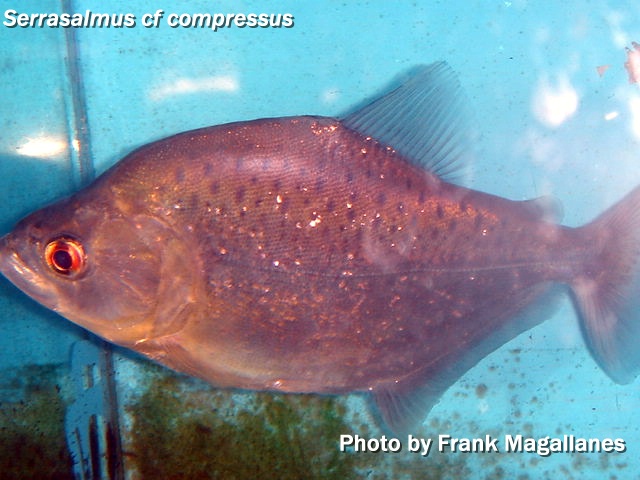
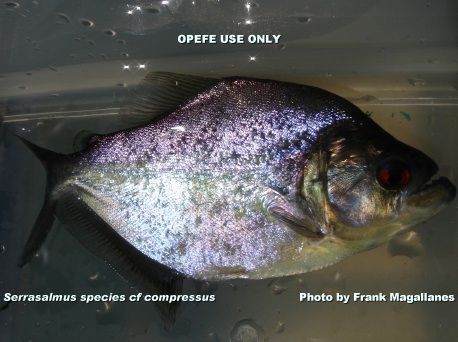
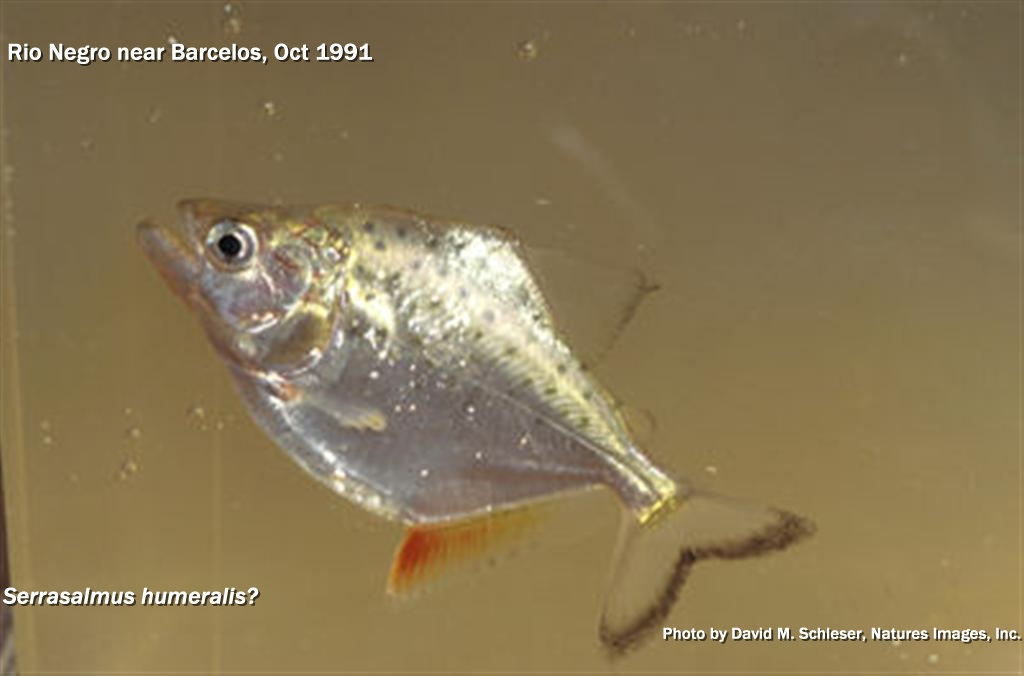
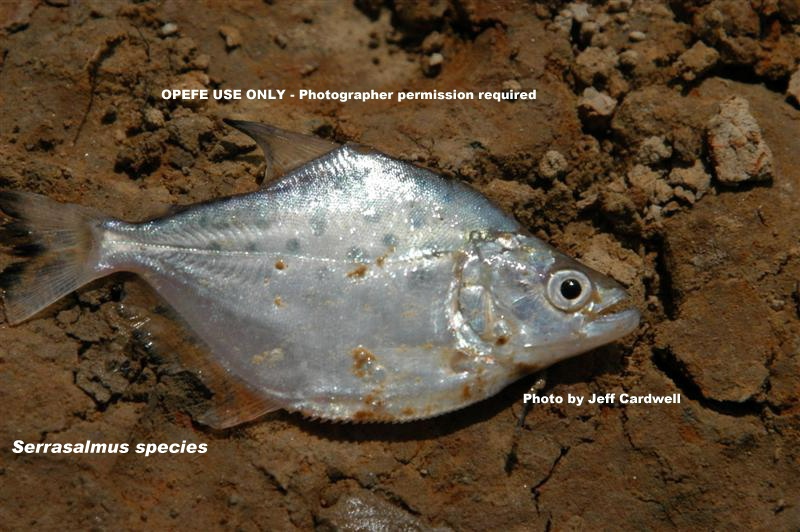
Image 1a and 1b,
is a Serrasalmus species collected from the Upper Amazon of Peru. I
have included a new photo since its growth in this outdoor (1b) shot. This
gives the viewer a better understanding of its brilliant coloration. Both
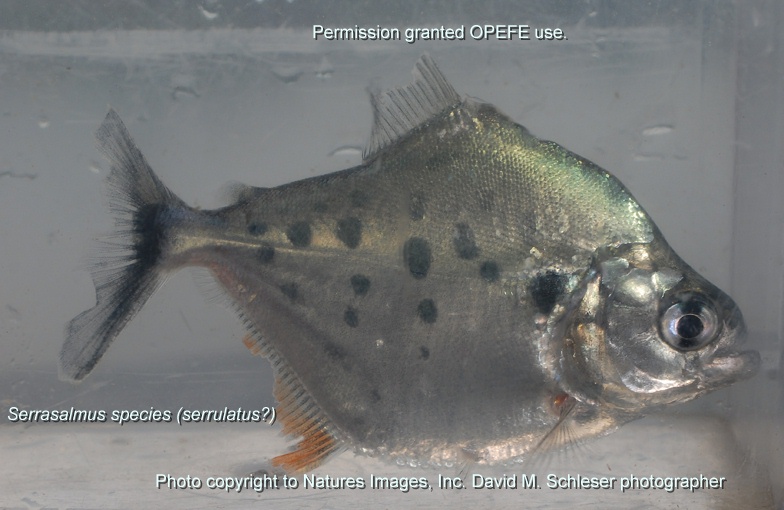
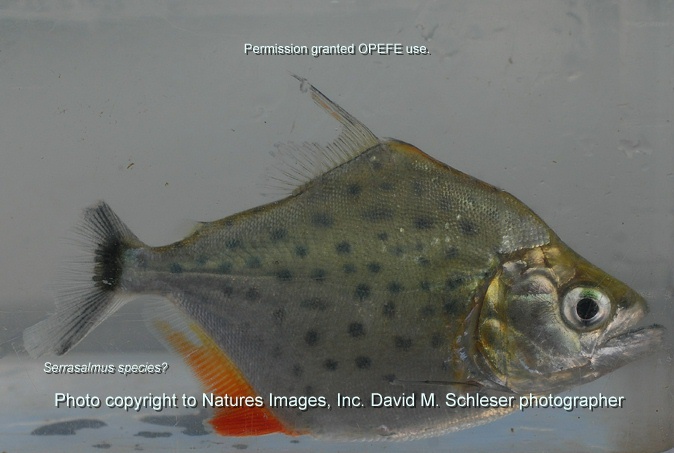
species 1 & 2 present sub adults of an unknown species resembling a
compressus-group member. Young ones have a vertical elongated spots on the
flank above the lateral line. The pattern deepens with combo small bars and
spots as the fish matures. The eye is red, but not deep. The fish in the
aquarium appears to grow rapidly, unlike S. rhombeus. The species
(since captivity) has become similar in appearance to Serrasalmus compressus a widespread species,
usually found in the same locality as S.
rhombeus. No decision has been made to move this photo to the
proper bionomen until more research is completed.
-
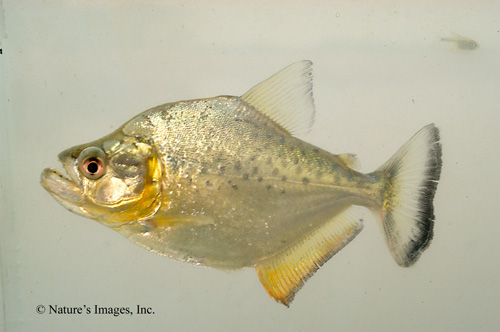
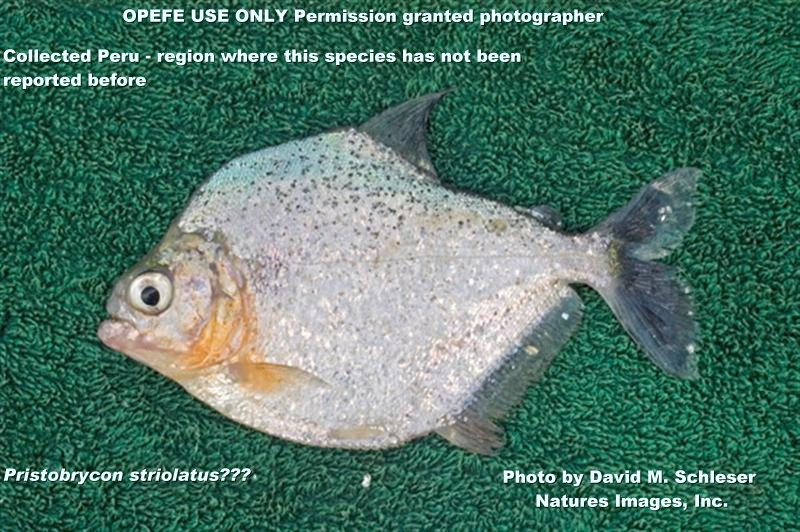
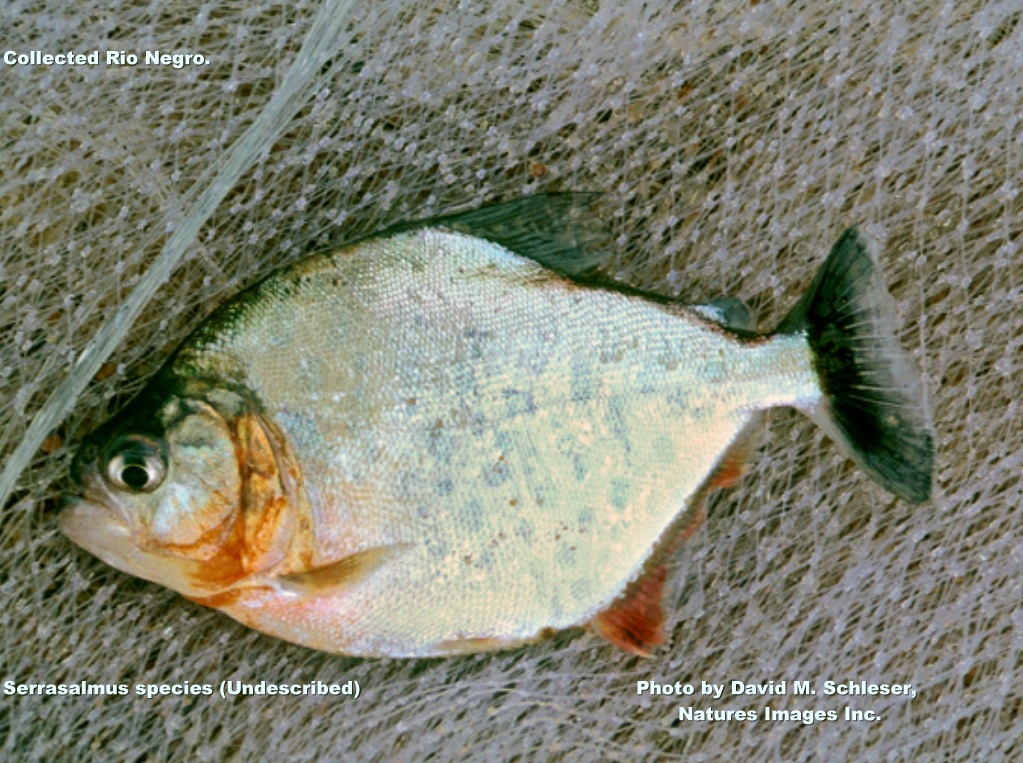
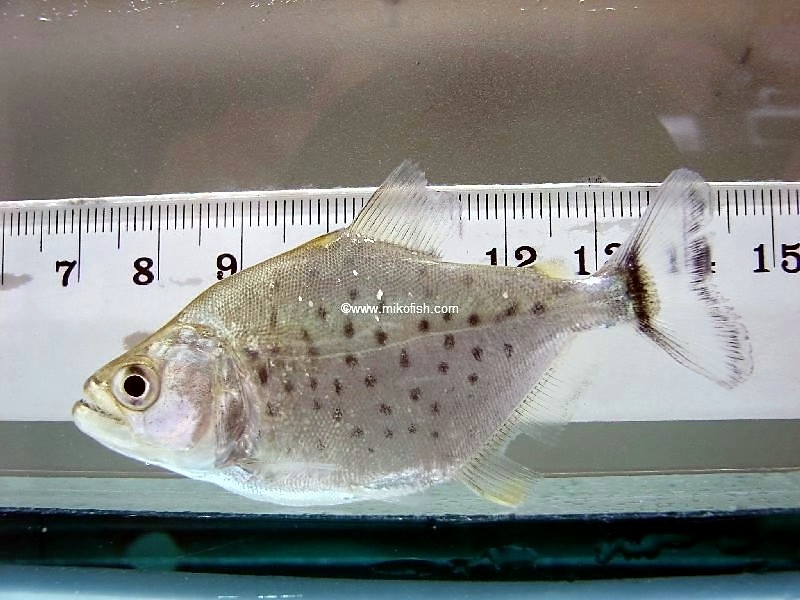
Image 2, is a Serrasalmus
species collected by David M. Schleser. Similar forms have been
collected near the town of Yanashi, Peru. According to Dave, these
species is very compressed and has a distinctive black caudal
terminal band very prominent from other species. My impression is the
fish may be S. compressus.
-
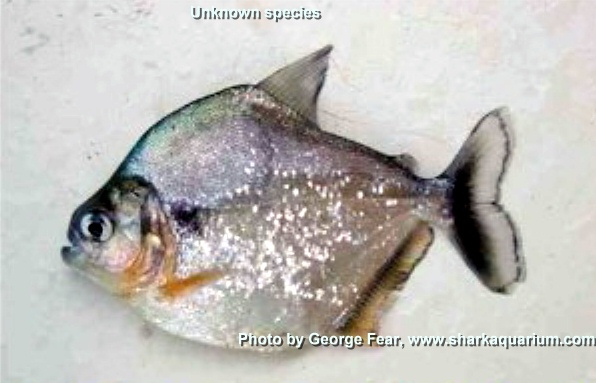
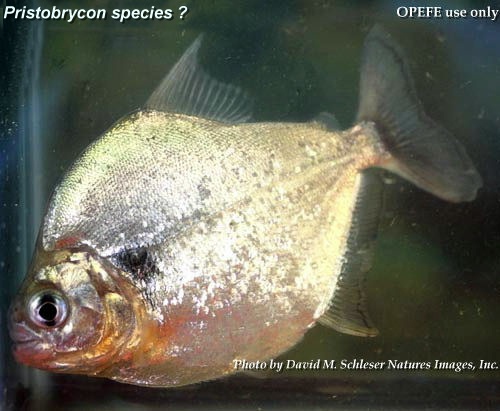
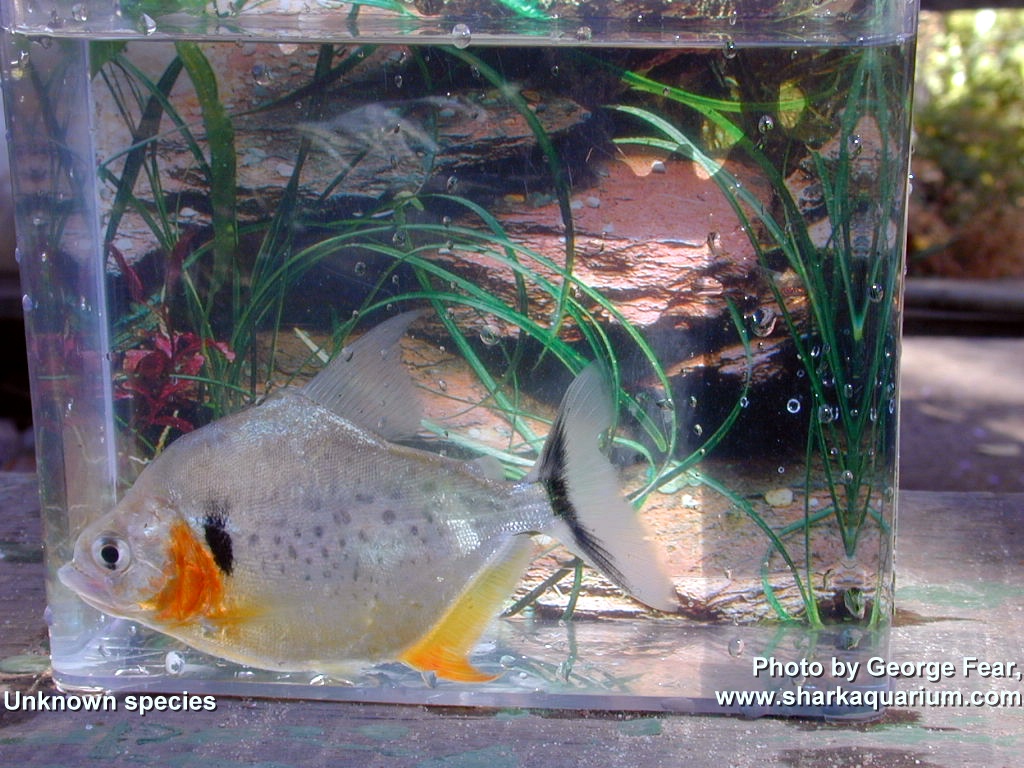
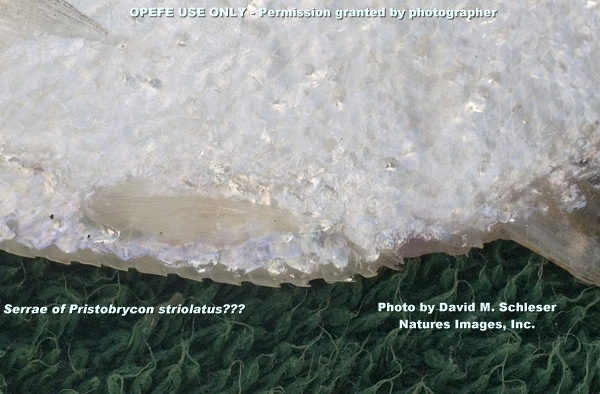
Image 3a & 3b,
is an unknown Pristobrycon-type collected and photographed by David M.
Schleser & George Fear. According Dave, this fish was collected at the
Tachshacurary river (a blackwater stream) just upstream from the village of
Tacshacuraray which is located where the Tachsahcuraray empties into the
Napo, Peru. Very certain S. serrulatus.
-
Image 4. Unknown
species collected by George Fear, appears similar to S. aureus or perhaps S.
humeralis.
-
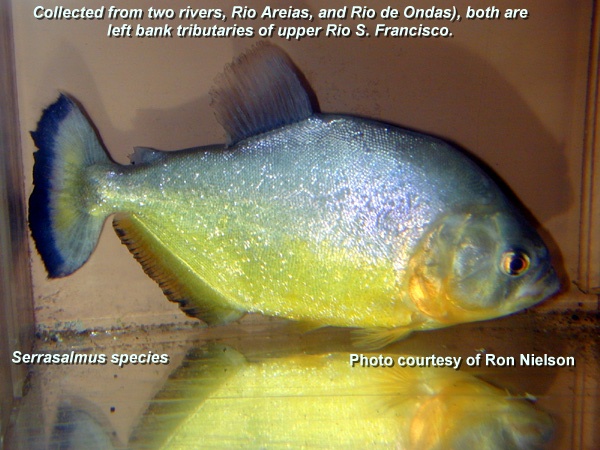
Image 5. Unknown
species. Photograph provided by Ron Nielson. Locality data on photo. May be
specimen erroneously packed with export. Seems to be similar to S. maculatus.
-
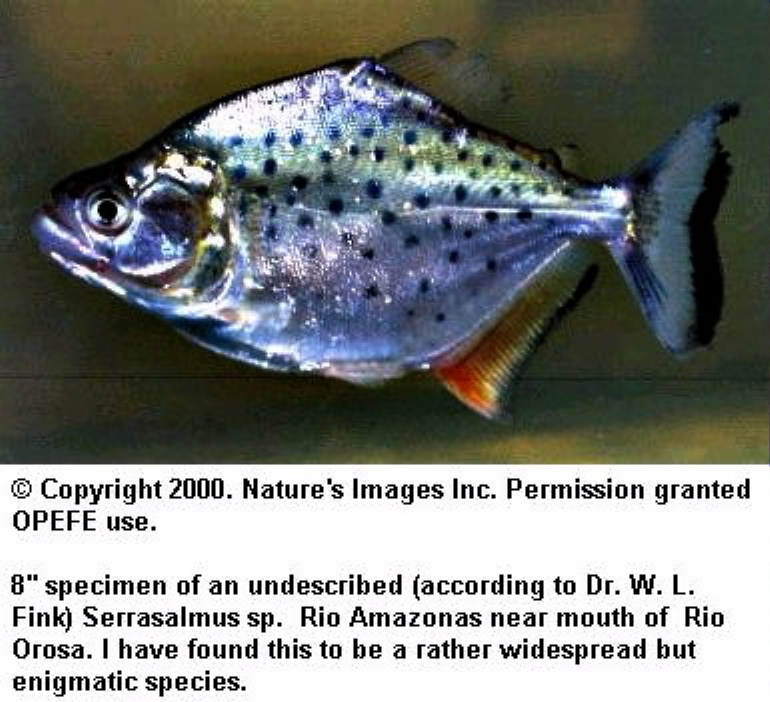
Image 6.
Undescribed species. Rio Amazonas, near mouth of Rio Orosa, seems similar
to image 2. Probably S. compressus.
-
Image 7.
Another difficult species to identify. David Schleser thought it might be a
member of the S. eigenmanni group or S.
humeralis. The body is a bright silver, with small spots and
elongated bars with a dark caudal fin band. Personally, I think it may be a
juvenile S. compressus. 11/11/11: My assumption was correct.
Species is S. compressus per conversation with D. Schleser.
-
Image 8A and 8B
was collected in rio Nanay, Peru (1988) by David M. Schleser. The species
resembles P. striolatus a
species not recorded in Peru at the present time. This may make this
species a first! M. Jégu identified a similar species (Brazil) but called
it P. calmoni (see image and accompanying
diagram under that species name). Some years ago, David had sent me a slide
of this fish and I was of the opinion it might have been a human released
specimen as he did not catch anymore since then.
-
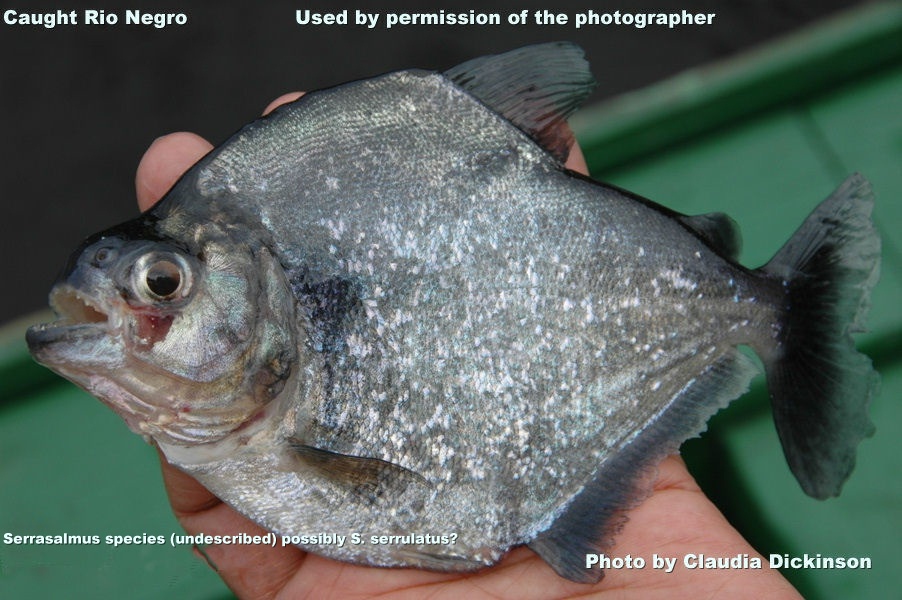
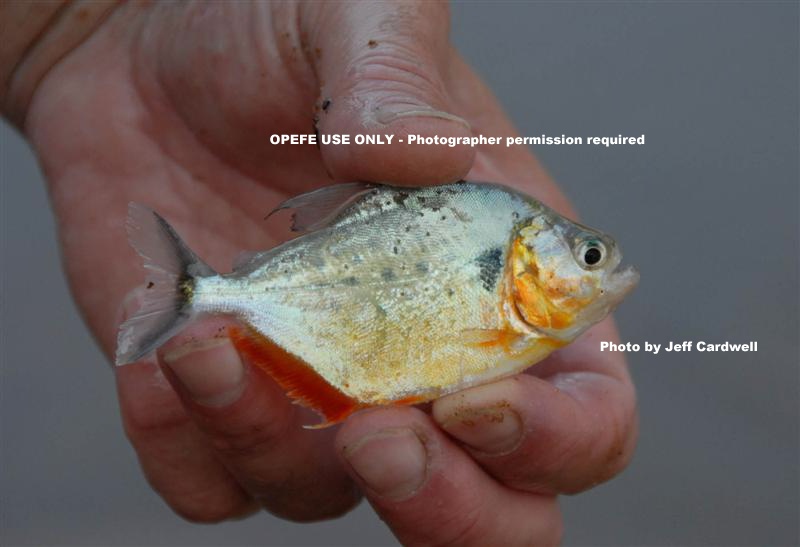
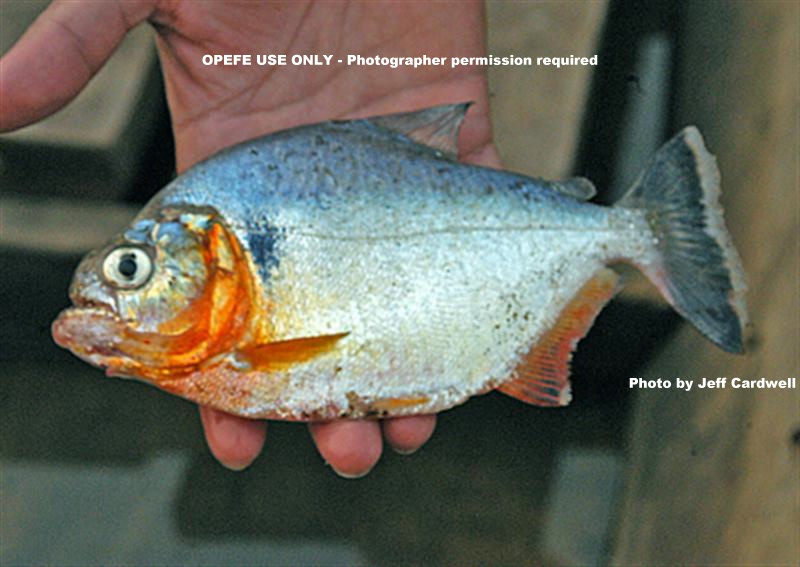
Image 9. This
fish was collected from the rio Negro. It remains undescribed and may be
either S. serrulatus or S. eigenmanni.
-
Image 10a. This
fish was collected in Venezuela. Its a young specimen that somewhat
resembles S. eigenmanni. However, I remain uncertain it is that
species or one that needs to be described. David Schleser thinks the
species might represent S. humeralis. I really don't know, but it
might be. But no humeral spot is present in both forms (adult and
juvenile).
-
Image 10b. is
from the rio Negro and may represent an adult form of 10a
-
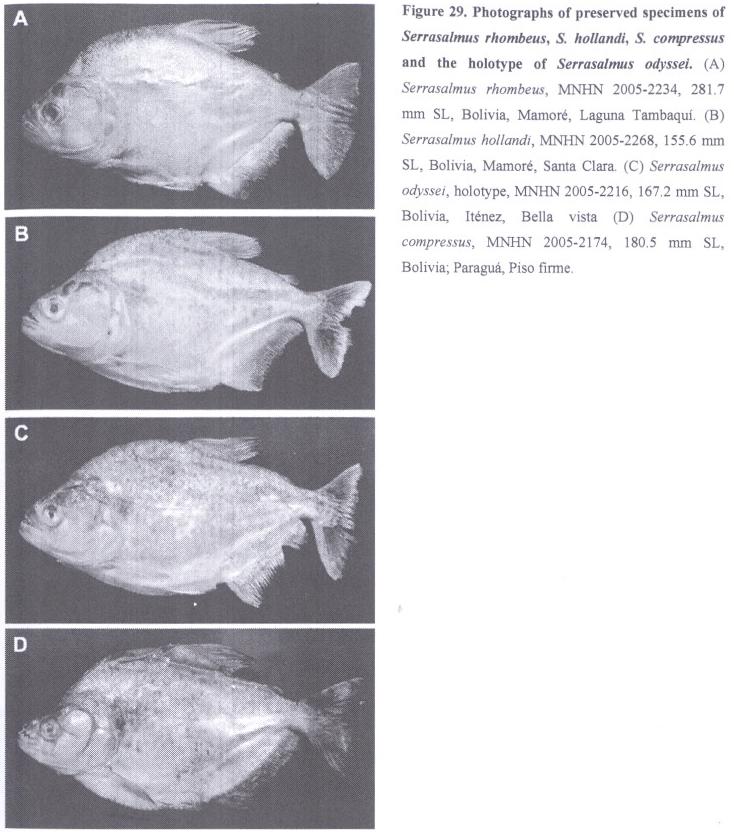
.Image 11a & 11b.
These two fish show adult and juvenile form. The smaller one resembling S. hollandi and
the larger adult. Both fish collected from San Martin river, Bolivia. Based
in N. Hubert preserved specimen,
might be S. hollandi.
-
Image 12.
Collected in Bolivia. Resembles a compressus-group member but not as
deep-bodied. Very likely S. compressus.
-
Image 13 According
to Dave Schleser, locale data is Padre Cocha, a town on Rio Nanay (Blackwater)
just a bit upriver from Iquitos where it joins whitewater Amazon. Water
here is a mix of both types due to Amazon flooding back into the rio Nanay.
Image 13 seems to fit the description of S. serrulatus.
-
Image 14. I'm
still uncertain of Image 14. It's a form found mainly in the Upper Orinoco
and Amazonas. It is quite possible a new species close to S. serrulatus.
It too was collected by Dave Schleser. It came up in net with real Serrasalmus
serrulatus near mouth of blackwater Rio Nanay.
-
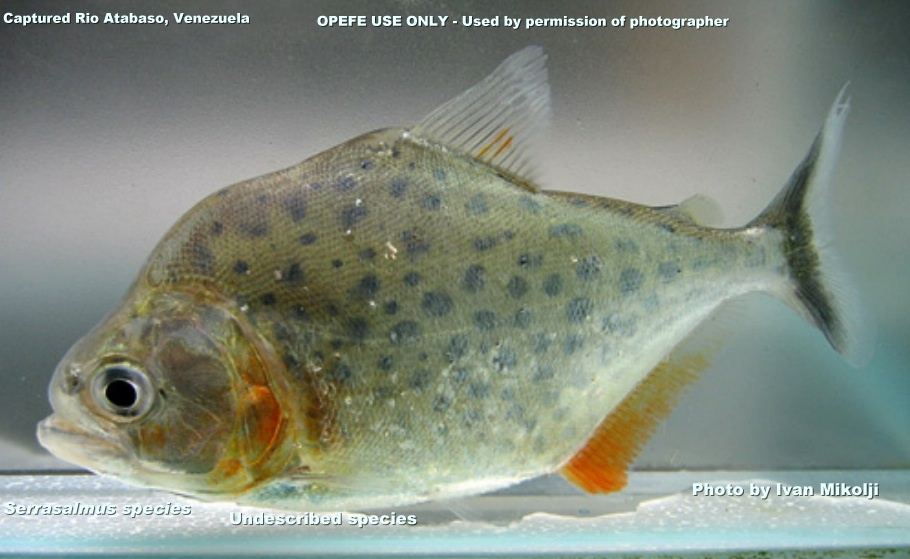
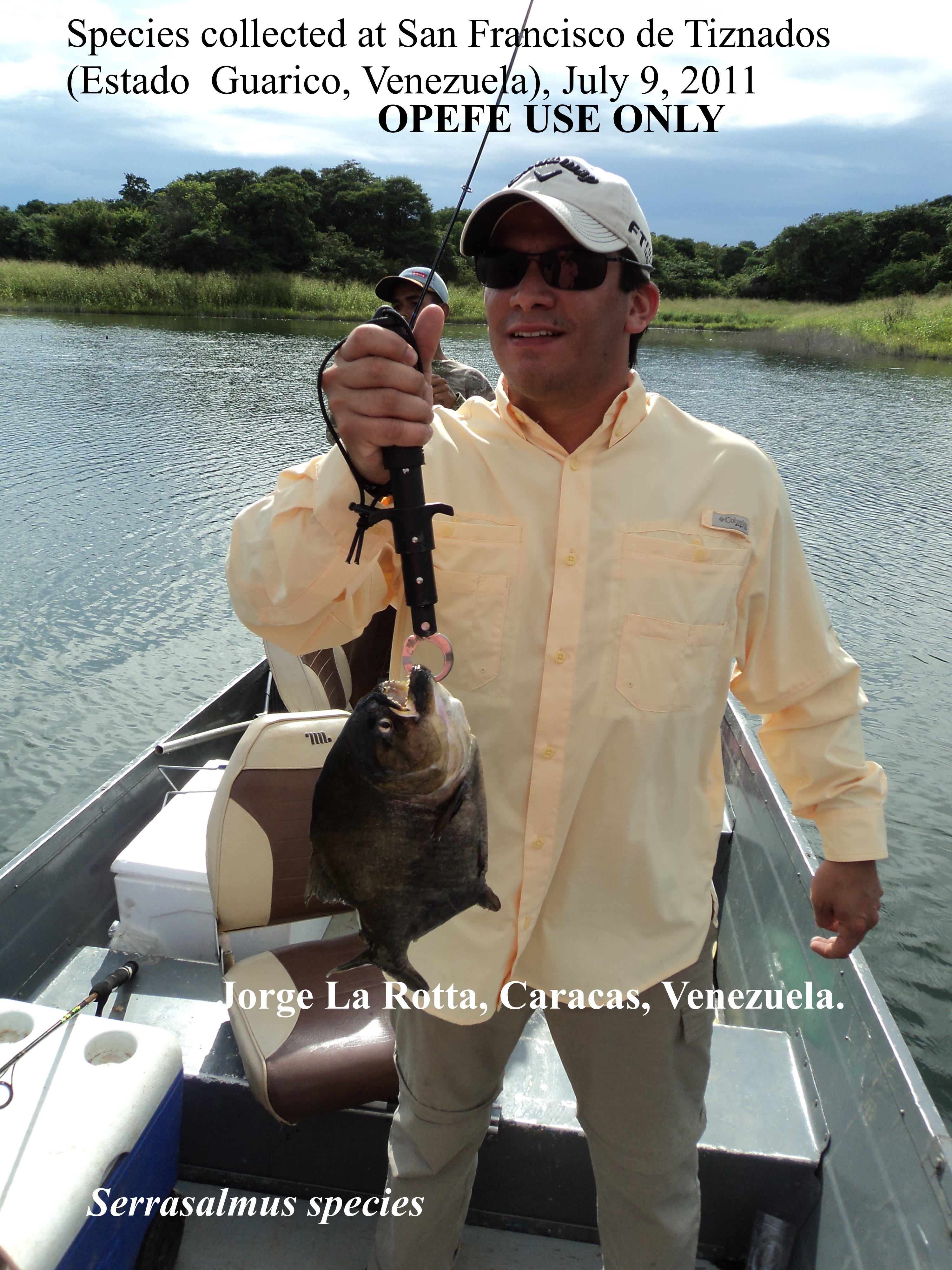
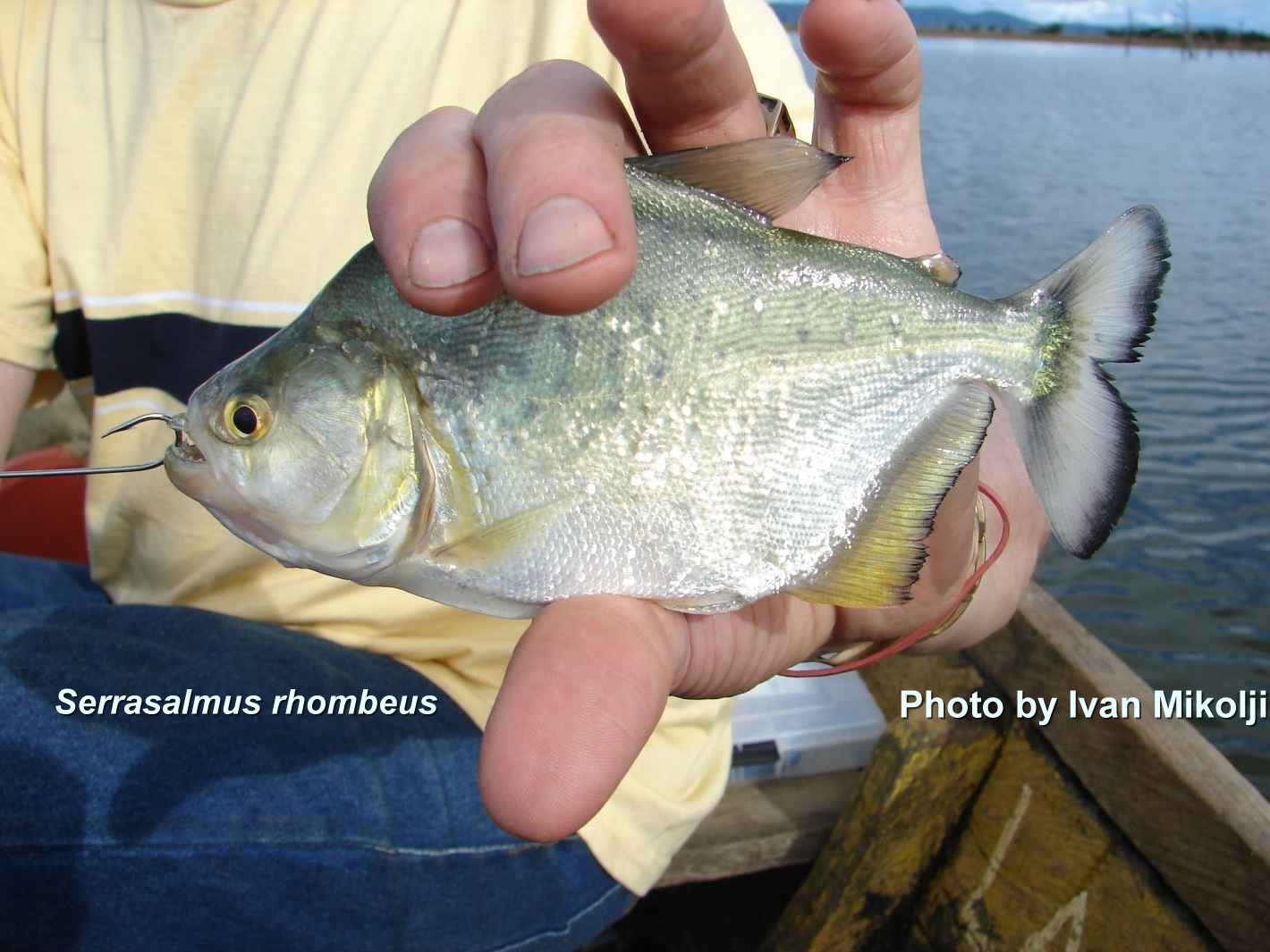
Image 15a-15c. I
am fortunate to show Juvenile, subadult and adult examples of an unknown Serrasalmus
species. Originally thought to be S.
rhombeus. The species does not have the distinctive red eye
commonly found on other species of S. rhombeus. While this species
is unique in appearance. Folks are cautioned not to jump to any conclusions
until this species has been vetted. Special thanks to Ivan Mikolji and
Daniel Caballero of Venezuela for presenting these photographs. 11/13/11 -
No further information has come in. I'm left with the impression the adult
fish may simply be an adult breeding Pygocentrus
species (Venezuela).